When Distance Is the Reinforcer: What a New Zoo Animal Welfare Paper Can Teach Us About Fearful Dogs

When a dog backs away from an unfamiliar object, or growls as someone approaches, a common recommendation is to pair the situation with treats.
Sometimes that works. Other times, the dog takes the food while remaining tense, takes the treat and then quickly retreats, or sometimes has a bigger reaction once the treat is consumed, and the scary situation is stll present.
In those moments, it is worth asking a different question:
What is the dog’s behavior already accomplishing?
A new paper by Barbara Heidenreich and Annette Pedersen, Rethinking Negative Reinforcement in Zoo Animal Welfare, explores this question (and many others) with zoo animals displaying fear and aggressive behavior. Although their examples include a tiger and an orangutan, the behavioral principles have direct applications to household pets (and even their humans!).
When behavior creates distance
A dog may do many behaviors to show they want distance from something. Commonly we see this as running away, shaking, growling, or even snapping and biting. The key is to determine if those behaviors reliably produce more space through assessment. In which case distance may be maintaining them.
Sometimes the dog is labeled stubborn, manipulative, or other descriptors; but the dog is simply responding to their environment.
"Behavior does not occur in a vacuum; it is shaped and maintained by its consequences."
From the dog’s point of view, backing away, barking, growling, or lunging may be a completely reasonable response to the situation. The behavior gets them the outcome that is critical in that moment: relief.
Once we understand that, we have another option besides trying to overcome the behavior with food. We can use the distance the dog is already seeking to build new ways of responding.
Negative reinforcement is not automatically kind
The phrase “negative reinforcement” often makes people uncomfortable. That concern is understandable because negative reinforcement can absolutely be used in harsh and coercive ways.
In behavioral terms, “negative” means something is removed, and “reinforcement” means the behavior becomes more likely. A dog growls at a stranger approaching, the stranger backs away, and growling becomes more likely under similar conditions.
But that definition alone does not tell us whether the training is compassionate.
A trainer could deliberately add pressure or discomfort that the dog was not already experiencing, and remove it only after the dog performs a required behavior. That is negative reinforcement, but it can still be highly aversive. It can also suppress or punish other behaviors along the way.
The important distinction made in this paper is whether we are creating an unpleasant situation so that the animal must work to escape it, or whether we are working with an unpleasant situation that the animal is already experiencing.
We do not need to create fear in order to reward relief from fear.
Instead, we can notice when a dog is already trying to gain distance and use that information to build additional, less costly ways for the dog to get the same outcome.
When treats create a conflict
Treats are useful, and positive reinforcement is a major part of our training. The problem is not the food.
The problem occurs when food is used to draw a dog toward something they are still trying to avoid.
Imagine a dog who is afraid of having a harness put on. The dog moves forward to eat a treat, and while the dog is eating, the harness moves closer. Now the dog is caught between two competing outcomes:
Moving closer brings food. Moving away brings relief from the harness.
Food can even make the dog’s behavior look "calm" without changing the reason the dog wants to leave.
There is another potential problem. If every moment of calm behavior is followed by the feared object moving closer, calm behavior may actually produce a worse situation for the dog. The dog settles, so we advance. The dog takes food, so we reach for the collar. From the dog’s perspective, remaining calm becomes the thing that allows the unpleasant situation to continue.
Mikey and the leash
I worked with a dog named Mikey who would not let me put on his leash.
It would have been easy to say that he disliked handling, did not trust people, or was simply being difficult. None of those descriptions would have given me enough information to help him.
So I started with an assessment.
Mikey was comfortable with me approaching under other conditions. His behavior changed when I approached while holding the leash. Even more telling, he appeared to relax once I put the leash away. He was not generally trying to avoid me. My approach with the leash was the specific situation in which he moved away.
I could have offered treats and encouraged him to come closer. But that risked putting Mikey in a conflict where he had to choose between approaching for food and escaping the leash.
Instead, I used a constructional procedure called Constructional Aggression Treatment, or CAT. Despite its name, the procedure is not limited to dogs displaying aggressive behavior. It is useful in any situation where the animal’s behavior is maintained by gaining distance.
In plain language, I used distance as the reinforcer.
I began under conditions where Mikey could already be successful. I started with just picking up the leash on the other side of the room from Mikey, then putting it away when he looked at me. After a few repetitions of this, he learned that just looking at me got the scary thing to go away. As we continued, we worked on building how long the leash remained present, closing the distance, manipulating the leash, all while he performed a number of desirable behaviors. I didn't focus on just one exact behavior. A variety of responses could make distance available, as long as they moved us toward a calmer and more comfortable leash routine.
Just as importantly, Mikey’s existing ways of asking for space continued to work. If his behavior showed that I had moved too close or progressed too quickly, I backed away and adjusted the next attempt.
"This is not treated as a procedural failure but as an indicator that the approximation exceeded what the animal could readily do at that point, and criteria are adjusted accordingly.”
His discomfort was not something to push through. It was information about what I needed to do next.
Distance was not the final goal
The goal was not for Mikey to spend the rest of his life making me walk away with the leash when he looked at me.
Eventually, we reached what the authors call the “switchover,” when behavior changes from “watchful avoidance or active distress to something more like curiosity and active engagement.” Mikey was no longer staying in place as I approached. He began approaching me and seeking friendly interaction.
Our goal was not simply to reduce avoidance. It was to build a leash routine in which Mikey could remain comfortable, approach, interact, and participate. Mikey was now actively approaching and seeking interaction. The relationship between Mikey, me, and the leash had changed.
At that point, I switched to Constructional Affection. Approaching and interacting with me could now be reinforced with affection and social contact. By then, getting away was no longer competing with social interaction. Affection could now reinforce his approach and participation.
Distance got us to a place where affection could take over.
Mikey now lets me put on his leash.
More than one way to say “I need space”
One of the most important parts of this approach is that the dog does not lose the ability to communicate discomfort.
Traditional exposure procedures sometimes rely on preventing escape until the dog stops responding. The dog may eventually stop pulling away, barking, or growling, but the absence of those behaviors does not necessarily mean the dog is comfortable.
In a constructional program, the old behavior is not made ineffective. If the dog needs more space, more space is still available.
At the same time, we build other ways to get that outcome. The dog may remain in place, look away, orient back toward the person, investigate, or approach voluntarily. Instead of taking away the dog’s existing communication, we expand the number of behaviors that work.
This gives us better information about how the dog is doing. It also means participation does not depend on the dog having only one acceptable option.
What dog owners can take from this
When your dog freezes, moves away, growls, barks, or avoids something, begin with curiosity rather than correction.
What is happening immediately before the behavior?
What does your dog do?
What changes afterward?
What would be the outcome if your dog did not do the behavior in question?
The goal is not simply to stop the dog from objecting. It is to build a situation where objection becomes less necessary because the dog has several successful ways to participate, pause, approach, or move away.
This does not mean walking toward a frightened or growling dog and waiting for a calm response. Starting distance, timing, safety, and an accurate assessment of what is maintaining the behavior all matter. When there is a bite risk or the dog’s behavior is difficult to interpret, this work should be guided by a qualified professional.
Sometimes helping a dog move forward begins by showing them that moving away still works. Once the dog no longer has to fight for distance, new possibilities can emerge: curiosity, approach, affection, and genuine participation.
If your dog is barking, growling, lunging, freezing, or avoiding certain people, objects, or situations, their behavior may be helping them create distance from something they find difficult. We can help you assess what is happening, identify the specific conditions that set the behavior up, and build safer, more comfortable ways for your dog to respond.
You can reach out to The Grateful Dog LA to schedule a consultation.
Source Notes
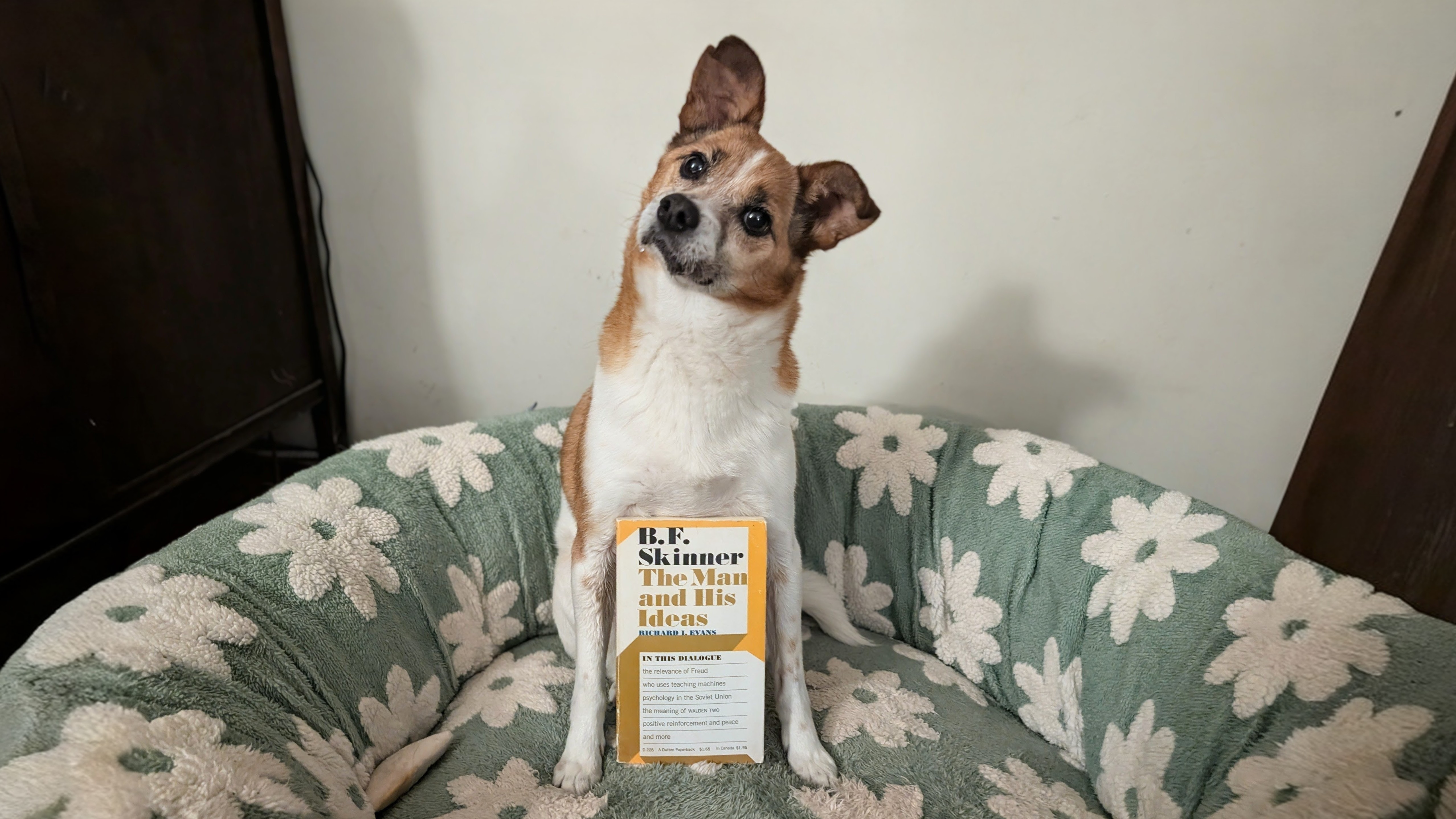
This post was inspired by:
'Reading Behavior' is a series of our reflections on books, papers, and interviews that have shaped how we think about behavior, training, and lives with our animals. We hope to encourage curiosity and hope regarding your dog's behavior by providing our insights on the passages that stayed with us, the questions they raised, and how they connect to building better lives with our dogs.